
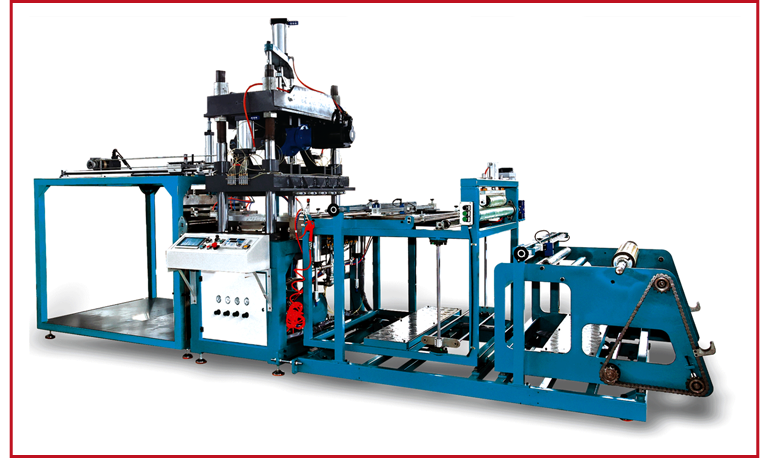
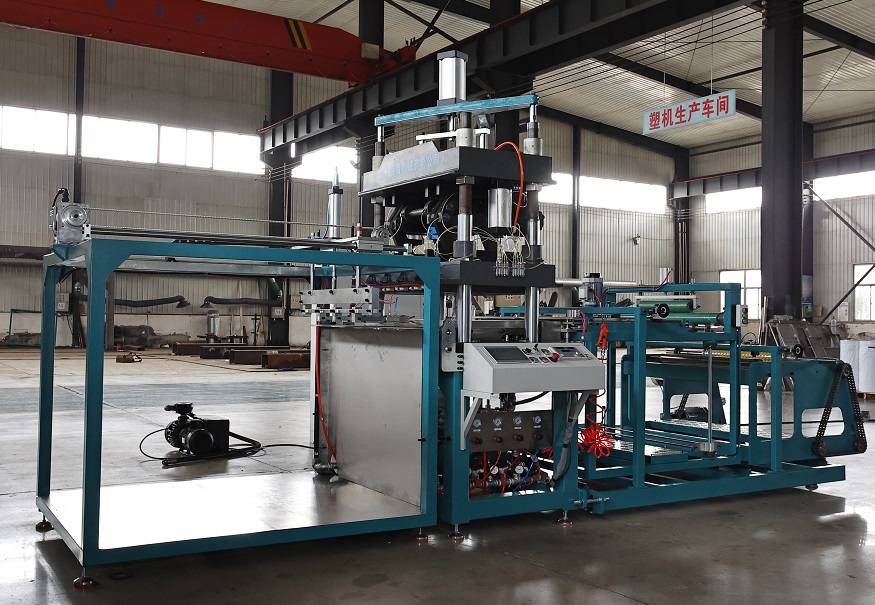
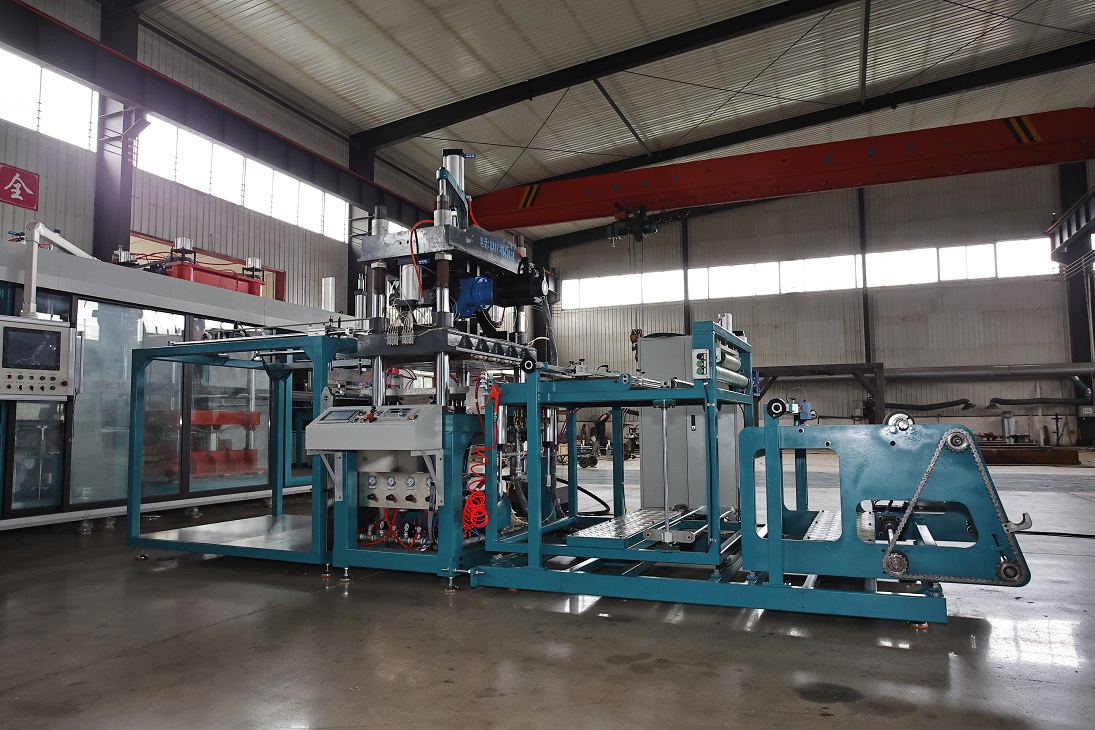
Machine Photo:
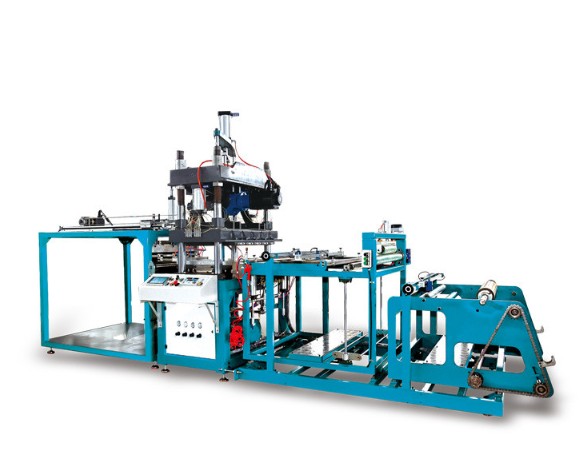
Brief Description of Workflow:
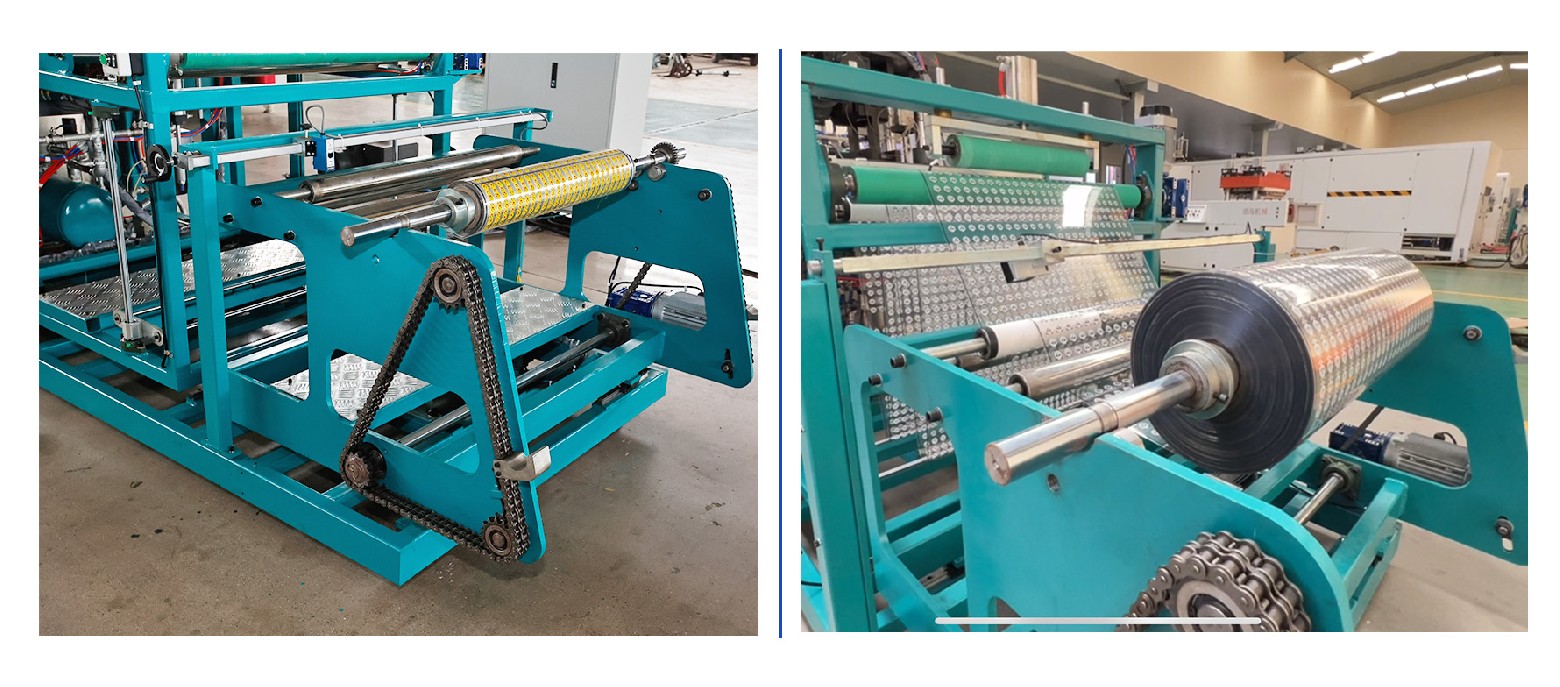
1.Feeding of Coil Material:The coil material printed with color patterns and positioning marks is loaded.
2.Material Feeding:The feeding mechanism clamps the sheet and sends it into the machine.
3.First Visual Inspection: Usually conducted before or after heating, it detects the marks to perform initial large-range position compensation.
4.Heating:The sheet is uniformly heated and softened in the heating zone.
5.Second Visual Inspection (Critical): Before entering the molding zone, the positions of marks are precisely detected again.
6.Dynamic Fine-tuning: The control system instructs the feeding servo to perform precise X/Y/θ compensation adjustments based on the latest detection results.
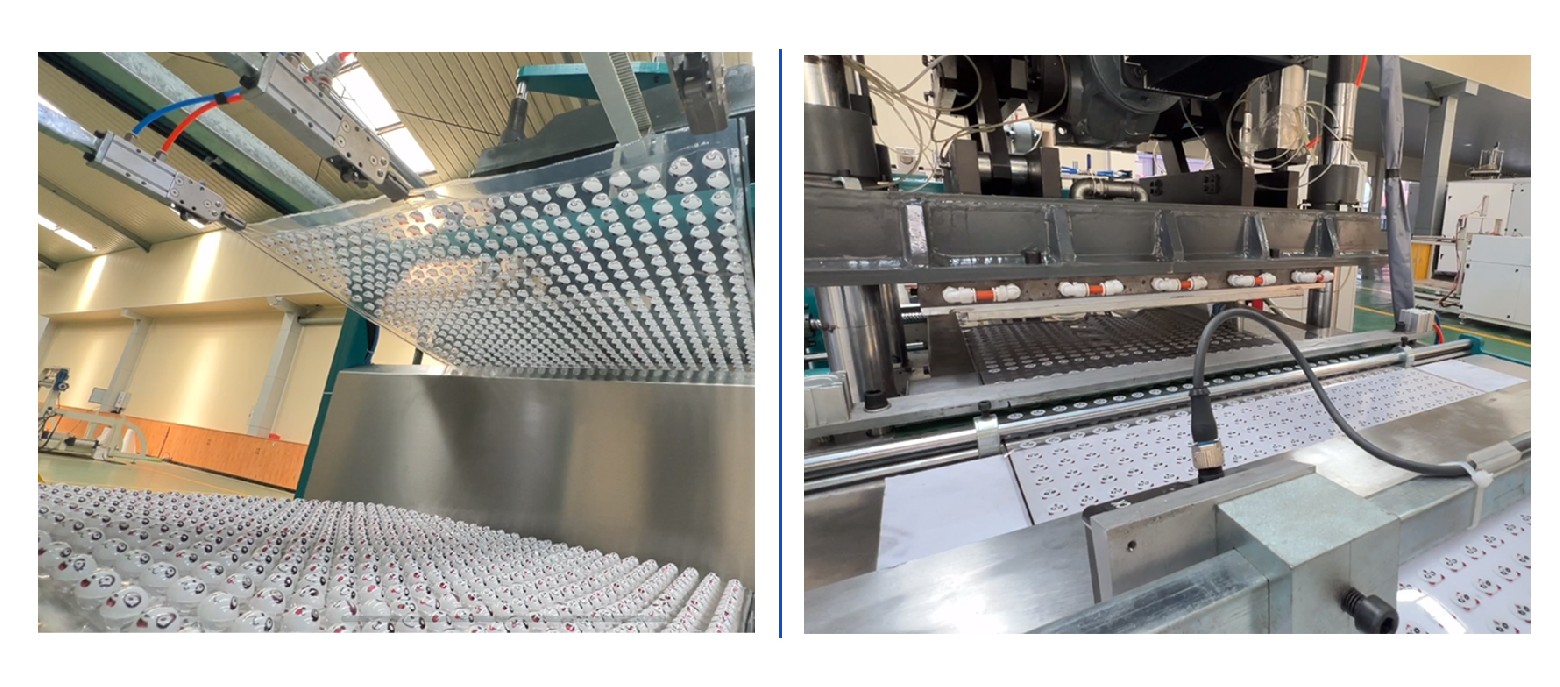
7.Precision Molding: The adjusted sheet enters the molding zone. The lower mold rises, and combined with vacuum/positive pressure, the softened sheet is accurately adsorbed/pressed into the mold cavity. At this point, the printed pattern is 'fixed' at the corresponding position designed in the mold.
8.Cooling and Shaping:The sheet is cooled to set its shape.
9.Positioning Cutting: Using registration information, the cutting unit is driven to precisely punch out the product.
Features
• Mechanical, pneumatic, and electrical integration, with each action program controlled by PLC and touch screen operation, simple and convenient.
• Imported electric eye, automatic correction, magnetic powder tension, temperature automatic control, automatic fault alarm, automatic shutdown reset, pull tab length, production counting.
• All digital settings such as shutdown and tracking color codes are automatically controlled by the computer, and all functions are completed at once.
• Aviation aluminum blowing board, efficient, durable, and easy to maintain.
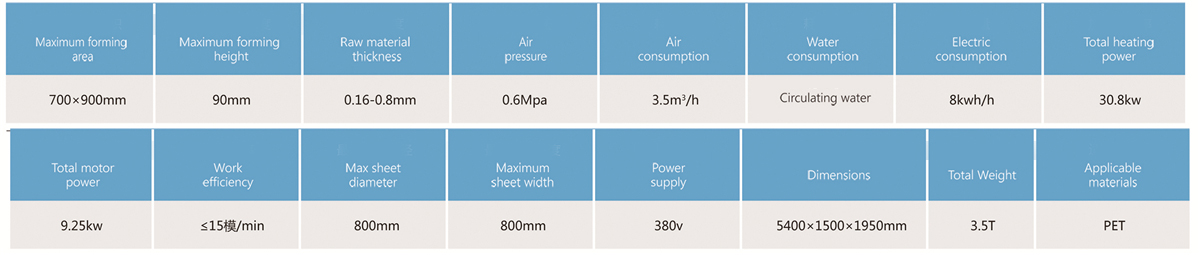
Product parameter
Product Photo & Features
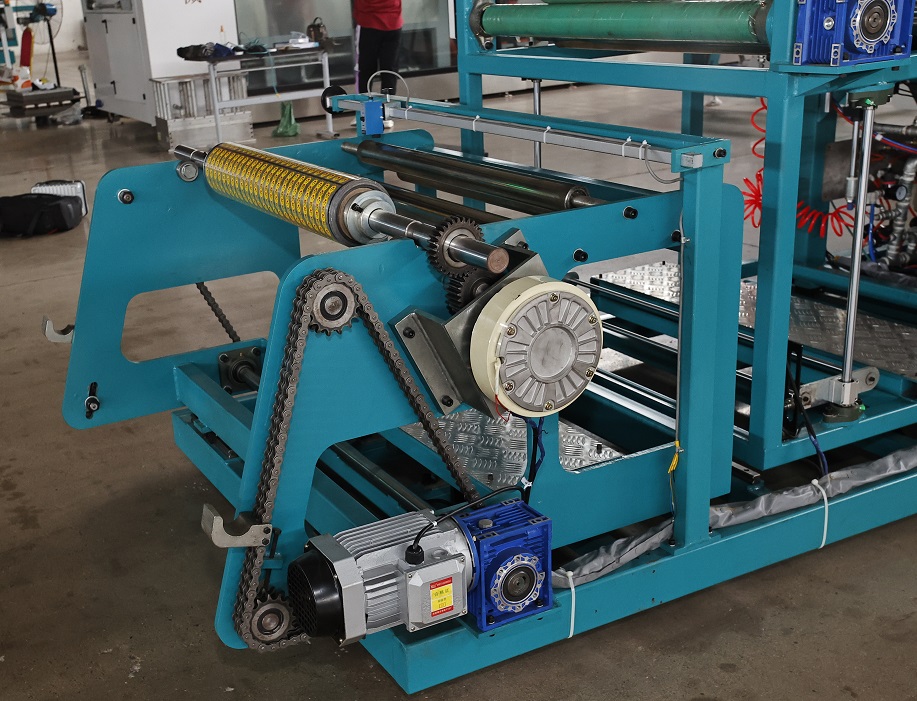
Magnetic powder brakes and deviation correction instruments ensure the stability and precision of sheet conveying, working in tandem to achieve high-precision coil control.
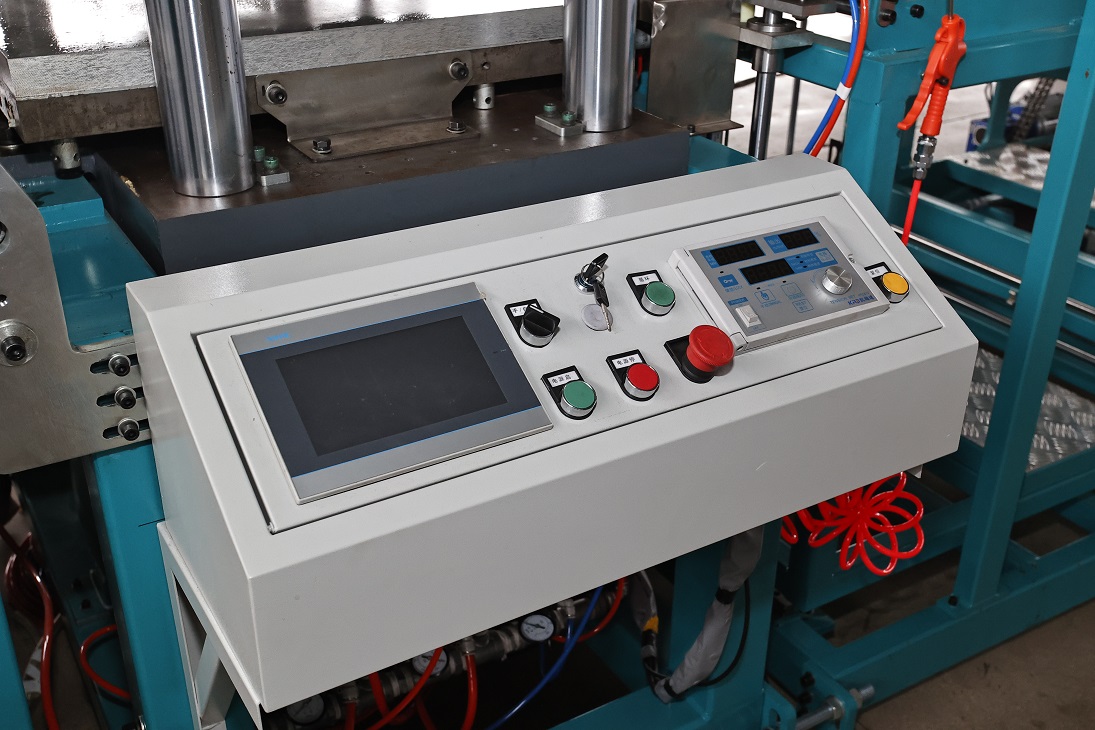
The industrial touchscreen serves as the core human-machine interaction terminal, undertaking three key functions: equipment control, process monitoring, and data management. It is equipped with an antibacterial glass panel that supports gloved operation.

leave a comment